
We have worked hard over previous years to minimize our environmental impact and we are pleased to be documenting this progress for existing and future clients, investors, and various other stakeholders.
Spring Marine manages on behalf of two independent fleets. This disclosure is for the management company including both tanker and bulk carrier fleets.
Key Metrics

1,045,970
Total Miles Traveled
TR-MT-000.B
8,900
Total Operating Days
TR-MT-000.CTR-MT-000.D

1,593,000
Deadweight Tonnage
TR-MT-000.DTR-MT-000.E
22 Tankers / 3 Bulk Carriers
Vessels in Fleet
TR-MT-000.E
787
Number of Vessel Port Calls
TR-MT-000.F

15.04 Years
Avg. Age of Fleet
Operational
| Description | SASB Code | Unit of Measure | 2022 | 2023 | Year-onYear Movement |
|---|---|---|---|---|---|
| Number of shipboard employees | TR-MT-000.A | Number | 478 | 550 | 15% |
| Total distance sailed | TR-MT-000.B/C/F | Nautical miles (nm) | 855,541 | 1,045,970 | 22% |
| Number of vessel port calls | TR-MT-000.F | Number | 699 | 787 | 13% |
| Number of calls at ports in countries that have the 20 lowest rankings in Transparency International’s Corruption Perception Index | TR-MT-000.B/C/F | Number | 0 | 3 (Libya, Port Sudan) | N/A |
| Total Operating Days | TR-MT-000.B/C/F | Days | 7,574 | 8,900 | 18% |
| Total No. of Vessels | TR-MT-000.E | Number | 22 | 25 | 14% |
| Total fleet DWT | TR-MT-000.D/G | Deadweight tons (DWT) | 1,352,718 | 1,593,000 | 18% |
| Average age of vessels | Number | 14.04 | 15.04 | 7% | |
| Number of vessels on order | Number | 0 | 0 | ||
| Number of Vessels by Flag State | Number | Marshall Islands 19, Malta 1, Panama 2 | Marshall Islands 18, Liberia 5, Panama 2 | ||
| Total vessels on order DWT | Deadweight tons (DWT) | N/A | 0 | ||
| Monetary losses as a result of legal proceedings associated with bribery or corruption | TR-MT-510a.2 | Currency (USD) | $0 | $0 | 0% |
Environmental
| Description | SASB Code | Unit of Measure | 2022 | 2023 | Year-onYear Movement |
|---|---|---|---|---|---|
| Gross global Scope 1 emissions | TR-MT-110a.1 | Metric tons (t) CO2e | 325,458 | 350,900 | 8% |
| Total amount of energy consumed in gigajoules (GJ) | TR-MT-110a.3 | Gigajoules (GJ) | 4,315,725 | 5,143,902 | 19% |
| Total SOX emissions in metric tons | TR-MT-120a.1 | Metric tons (t) | 452 | 465 | 3% |
| Total NOX emissions in metric tons | TR-MT-120a.1 | Metric tons (t) | 5,485 | 5,419 | -1% |
| Total PM emissions in metric tons | TR-MT-120a.1 | Metric tons (t) | 133 | 139 | 4% |
| CO2 emissions per tonne-mile (EEOI) | gCO2e/ (MT-nm) | 12.86 | 13.11 | 2% | |
| SOX emissions per tonne-mile | gCO2e/ (MT-nm) | N/A | 0.0169 | ||
| NOX emissions per tonne-mile | gCO2e/ (MT-nm) | N/A | 0.1971 | ||
| PM emissions per tonne-mile | gCO2e/ (MT-nm) | N/A | 0.0051 | ||
| Average Annual Effiency Ratio | gCO2e/ (MT-nm) | 5.77 | 5.57 | -3% | |
| (1) Number and (2) aggregate volume of spills and releases to the environment | TR-MT-160a.3 | Number / m3 | 0 | 0 | 0% |
| Shipping duration in marine protected areas or areas of protected conservation status (number of days) | TR-MT-160a.1 | Number | N/A | 5 | Average Annual Efficiency Ratio |
| Percentage of Vessels implementing ballast water exchange and treatment | TR-MT-160a.2 | Percentage (%) | 100% | 100% | 0% |
| Percentage of heavy fuel oil (ASTM Specifications D 396 and D 975 and Federal Specification VV-F- 815C) consumed by Vessels | TR-MT-110a.3 | Percentage (%) | N/A | 0 | |
| Percentage of renewable fuels | TR-MT-110a.3 | Percentage (%) | N/A | 0 | |
| Fuel consumption, by type | Metric tons (t) | HFO: 63,906 LFO: 33,284 MGO: 10,025 | HFO: 5,883 LFO: 48,103 MGO: 20,245 | ||
| Bilge | m3 | N/A | 1,562 | ||
| Sludge | m3 | N/A | 3,764 |
Social
Description | SASB Code | Unit of Measure | 2022 | 2023 | Year-onYear Movement |
|---|---|---|---|---|---|
| Number of conditions of class or reccomendations | TR-MT-540a.2 | Number | N/A | 11 | |
| Number of shoreside staff in your organisation | Number | N/A | 78 | ||
| Percentage of female employees | Percentage (%) | N/A | 5% | ||
| Board Make Up (M / F) | Percentage (%) | 50/50 | 100/0 | ||
| Senior Management Make Up (M / F) | Percentage (%) | N/A | 100/0 | ||
| Shoreside Make Up (M / F) | Percentage (%) | 73/27 | 68/32 | ||
| Seafarer Make Up (M / F) | Percentage (%) | 99/1 | 98/2 | ||
| Lost time incident rate (LTIR) | TR-MT-320a.1 | Rate | 0.91 | 0.51 | -44% |
| Total Recordable Case Frequency (TRCF) | Rate | 1.22 | 0.51 | -58% | |
| Total number of marine casualties, percentage classified as very serious | TR-MT-540a.1 | Number | 0 | 0 | |
| Number of port state control (1) deficiencies and (2) detentions | TR-MT-540a.3 | Number | 19 0 | 68 1 | 258% N/A |
| Total number of port state control inspections | Number | 24 | 43 | 79% | |
| PSC Defiencies / Inspections | Rate | 0.79 | 1.58 | 100% |
Environmental
At Spring Marine, we recognize the importance of operating responsibly and minimizing our negative environmental impact.
As a global shipping provider, we are committed to enhancing sustainability by optimizing efficiency, investing in energy-saving technologies, and implementing innovative solutions to reduce emissions across our fleet. This continues to be one of our core focus areas as we work toward more sustainable operations and contribute to the broader decarbonization efforts within the maritime industry.
EMissions
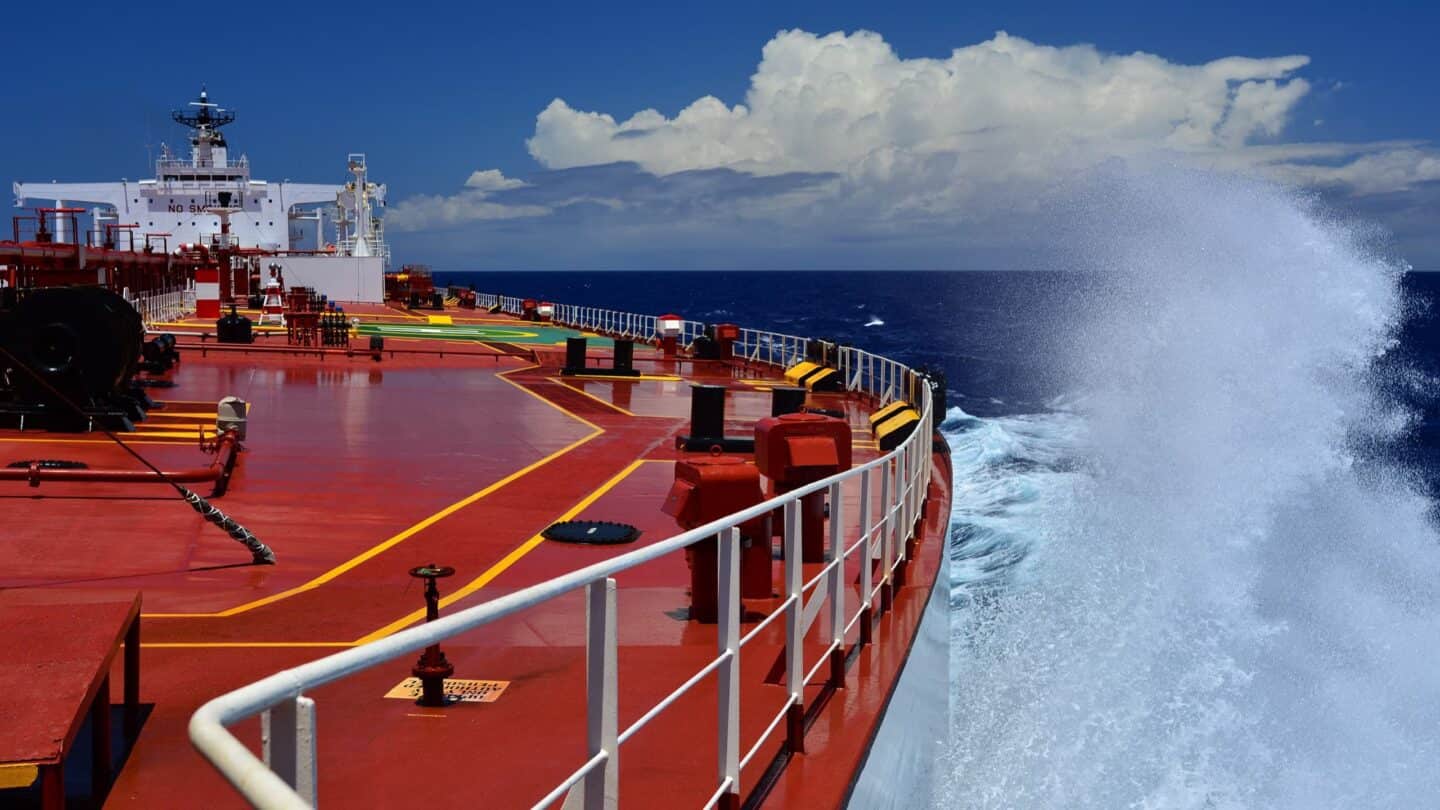
In 2023, our operations grew significantly, with operating days increasing by 18% from 7,574 to 8,901, due to the addition of three new vessels and greater total distance travelled. While this expansion led to an 8% rise in total Scope 1 emissions—from 325,458 to 350,900—emissions grew at a much lower rate than our activity. This demonstrates that as we scaled our fleet and operations, we also improved efficiency, reducing emissions per operating day compared to the previous year.
Looking into 2024 and beyond, we will continue to explore decarbonization opportunities to improve operational efficiency and reduce emissions. Our focus remains on implementing energy- saving technologies, including the use of SulNOx chemicals across our fleet. These new initiatives employ emulsifiers, combustion improvers, sludge dispersants, and stabilizers to help enhance fuel efficiency and reduce emissions.

Decarbonisation and Net Zero
We actively adhere to international regulations while implementing decarbonization measures to lessen our environmental footprint. By continually evaluating and enhancing our processes to align with industry best practices we not only meet but exceed expectations in environmental stewardship.
The IMO plans to publish mid-term measures by the end of 2025, which are expected to enter into force in 2027. These measures will likely include mandatory requirements for the adoption of low- and zero- carbon fuels, enhanced energy efficiency standards for ships, and market based mechanisms to incentivize emissions reductions. These initiatives are part of the IMO’s strategy to achieve net-zero greenhouse gas emissions from international shipping by 2050.
We fully support the IMO’s target of net-zero greenhouse gas emissions by 2050 and are aligning our operations to meet forthcoming regulations. Our new partnership with SulNOx enables us to cut emissions and improve fuel efficiency using advanced fuel additives. These additives enhance combustion, reducing unburnt fuel and particulate matter emissions while lowering bunker consumption. Independent tests have shown potential fuel savings of over 10%, highlighting the effectiveness of this solution. This initiative supports our commitment to minimizing our environmental impact, meeting regulatory requirements, and continuously improving the sustainability of our operations.
Energy Efficiency
In 2023, we continued our efforts to improve fleet efficiency and reduce emissions through targeted investments in energy-saving technologies. The installation of propeller ducts on three vessels contributed to optimizing propulsion, enhancing fuel efficiency, and lowering overall carbon intensity. To track our progress, we measure and report on AER and EEOI. AER measures a ship’s carbon intensity using total CO2 emissions, deadweight tonnage, and distance travelled, but it doesn’t account for actual cargo load. EEOI is more precise, measuring fuel consumption per unit of cargo moved per nautical mile to track real-world efficiency.
As a result of our efficiency improvement measures our AER decreased from 5.77 in 2022 to 5.57 in 2023 indicating improved efficiency per tonne-nautical mile travelled.
However, our EEOI increased by 2% in 2023, which suggests a slight decline in the efficiency of vessel use. This was primarily due to variances in the global trading environment. While this small fluctuation remains within our acceptable limits, we are committed to continuously improving the efficiency of our
operations.
We recognize the need for continuous efficiency improvements and remain committed to optimizing our fleet’s performance.
In 2024, we are due to fit an additional nine vessels with propeller ducts. We will also continue to assess the ways we can leverage our partnership with SulNOx.
With plans to install propeller ducts on an additional nine vessels in 2024 and ongoing efforts to refine operational strategies, we aim to further enhance our energy efficiency and reduce emissions across our operations.
SulNox Partnership
Our new partnership with SulNOx enables us to cut emissions and improve fuel efficiency using advanced fuel additives. These additives enhance combustion, reducing unburnt fuel and particulate matter emissions while lowering bunker consumption. Independent tests have shown potential fuel savings of over 10%, highlighting the effectiveness of this solution. This initiative supports our commitment to minimizing our environmental impact, meeting regulatory requirements, and continuously improving the sustainability of our operations.
Marine Biodiversity
As a global shipping provider, we are committed to minimizing our impact on marine biodiversity through responsible operations. This includes preventing spills and ensuring compliance with MARPOL and all relevant regulations to protect marine ecosystems.
We are pleased to report zero spills or releases to the environment in 2023, reflecting our continued focus on protecting the waters in which we operate.
Ballast Water Management
To prevent the spread of invasive aquatic species, the IMO’s Ballast Water Management (BWM) Convention mandates that ships manage their ballast water to specific standards. The D-1 standard requires ships to perform ballast water exchange in open seas, away from coastal areas, to minimize the transfer of potentially harmful organisms. The more stringent D-2 standard sets limits on the number of viable organisms allowed in discharged ballast water, necessitating the installation of approved ballast water treatment systems. As of September 2024, all ships are required to comply with the D-2 standard.
We are proud to report that all our vessels have been equipped with D-2 standard ballast water treatment systems since 2022, well ahead of the Convention’s regulatory requirement.
This proactive measure demonstrates our commitment to environmental stewardship by reducing the risk of introducing non-native species and supporting the health of marine ecosystems in the regions where we operate.
Governance
Governance drives everything we do at Spring Marine. We continuously strengthen our management practices by aligning with global standards, engaging with stakeholders, and adapting to new challenges with integrity. Transparency and accountability form the cornerstone of our governance approach ensuring that every decision reflects our commitment to excellence, ethical practices, and sustainable growth.
Governance Structure
Our General Manager, Technical Manager, and Designated Person Ashore (DPA) are charged with the oversight of sustainability-related matters
Industry Participation
We are proud to be a member of the Hellenic Marine Environment Protection Association (HELMEPA)
organization. HELMEPA plays a vital role in promoting environmental awareness and sustainability within the maritime sector, inspiring responsible practices to protect the marine environment.
We are aiming to strengthen our partnership with HELMEPA in 2024 by engaging in collaborative initiatives that underscore our commitment to marine conservation and collective environmental action.
Regulatory Compliance
We are currently preparing for upcoming regulations including the CSRD, EU ETS, FuelEU, While we are not currently in scope for CSRD reporting, we have started preparing a materiality assessment to ensure we stay aligned with evolving regulatory expectations and industry best practices. As part of this effort, we will also explore ways to refine our data collection processes to improve accuracy, enhance transparency, and better support future reporting requirements.
The EU ETS will extend to shipping in 2024, requiring companies to monitor emissions and purchase allowances for a portion of them. This system encourages reduced emissions through cleaner technologies and alternative fuels. As such, we are proactively investing in energy-efficient measures and exploring lower-carbon fuel options to minimize our environmental impact and remain competitive in the transition to a greener industry.
Additionally, the FuelEU Maritime regulation will come into effect in 2025 setting stricter limits on the greenhouse gas intensity of energy used onboard ships. This will require companies to adopt lower-carbon fuels and improve energy efficiency to comply with increasingly stringent targets over time. We are assessing our fuel consumption strategies and operational measures to ensure compliance and support industry-wide decarbonization efforts.
Social
Workforce Safety and Wellbeing
At Spring Marine, workforce safety is a top priority. Through comprehensive training and development initiatives, we equip employees with the knowledge and skills needed to prevent incidents and respond effectively to emergencies. Our training programs align with the stringent requirements of ISO 9001, the
International Safety Management (ISM) Code, and the Maritime Labour Convention (MLC), ensuring compliance with international standards and best practices to enhance operational safety.
In 2023, we conducted several trainings including trainings on crisis management and response, first aid at sea, and working in
hazardous weather conditions.
Guided by our Safety Management System (SMS) and Shipboard Occupational Health and Safety Program (SOHSP), we prioritize accident prevention and injury reduction across our operations.
Regular vessel inspections, audits, and risk assessments help us identify and mitigate potential hazards, ensuring that clear safety protocols and protections are in place for our crew. Through continuous evaluation and improvement, we strive to uphold the highest safety standards.
We are pleased to report another year with zero marine casualties. This remains our target in 2024 and beyond.
Our commitment to safety is reflected in our performance. In 2023, we achieved an LTIR of 0.51, marking a 44% decrease from 0.91 in 2022. We are very proud of this improvement however we realize that there is further progress to be made. We remain focused on strengthening our safety measures to protect our crew and enhance workplace security.
We are also pleased to report a 58% decrease in our Total Recordable Case Frequency (TRCF), from 1.22 in 2022 to 0.51 in 2023. This metric provides a broader view of workplace safety by capturing all recordable incidents, including those that did not result in lost time. Tracking TRCF allows us to better assess safety performance and identify areas for continuous improvement.
As we refine our reporting and safety initiatives, we remain committed to reducing incidents and ensuring the well-being of our workforce both onshore and at sea.
Port State Control
In 2023, the number of port state control (PSC) inspections across our fleet increased from 24 to 43 reflecting a rise in regulatory oversight. With more inspections conducted, the absolute number of recorded deficiencies increased from 19 to 68, with the deficiency rate rising from 0.79 to 1.58. This rise in the deficiencies per inspection, while still low, is a key area of focus for the coming year.
While our PSC figures reflect a changing inspection landscape, we remain committed to maintaining high operational standards. We will continue to monitor trends, strengthen crew awareness, and ensure our vessels meet all regulatory expectations.
Employee Wellbeing
At Spring Marine, we recognize the importance of our team’s physical and mental wellbeing and aim to create a work environment conducive of this. In 2023, we strengthened this commitment by delivering targeted training programs, including mental health and well-being training and fatigue and stress management sessions. These initiatives equip our team with the tools to maintain their well-being, enhance safety, perform at their best in a demanding maritime environment.
Diversity, Equality and Inclusion
Spring Marine values a workplace culture built on respect, fairness, and inclusivity. We support equal access to career development and encourage diverse perspectives that strengthen our workforce. We take a zero-tolerance approach to harassment, discrimination, and any form of workplace misconduct.
Shoreside
Our shoreside team comprises 32% female employees, marking a 19% increase from 27% in 2022. This progress reflects our ongoing efforts to promote gender diversity and create opportunities for women in the maritime sector.
Seafarers
The gender imbalance among our seafarers reflects a wider challenge across the maritime industry, where women are often underrepresented. Within our own seafaring workforce, women account for just 2% of our total crew. We recognize the need for industry-wide collaboration to break down barriers and create
more opportunities for women in seafaring roles. As part of our commitment to a more inclusive industry, we actively consider female cadets in our cadetship program selection process, supporting the next generation of talent.
While progress will take time, we remain dedicated to promoting greater diversity at sea and encouraging more women to pursue careers in the maritime industry.